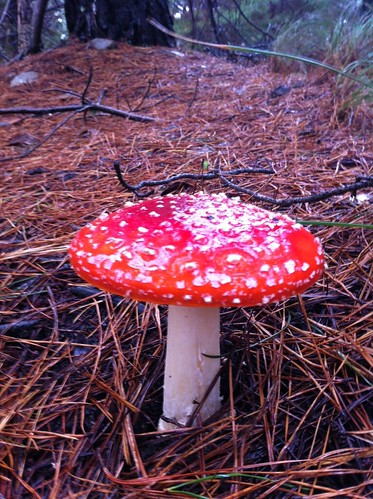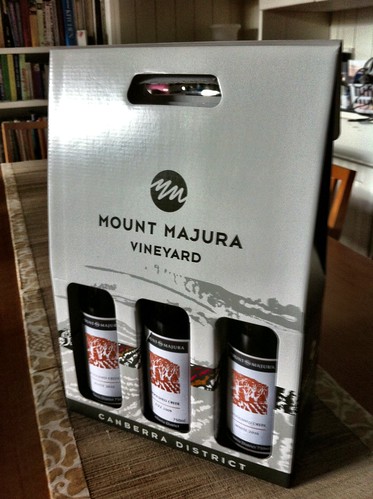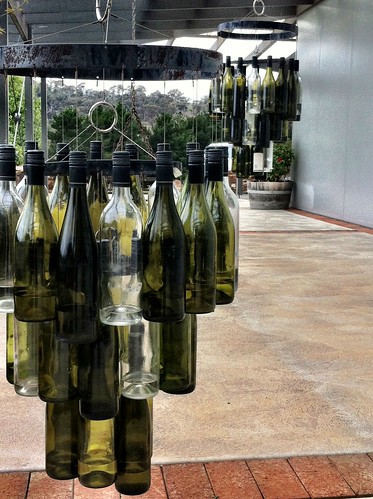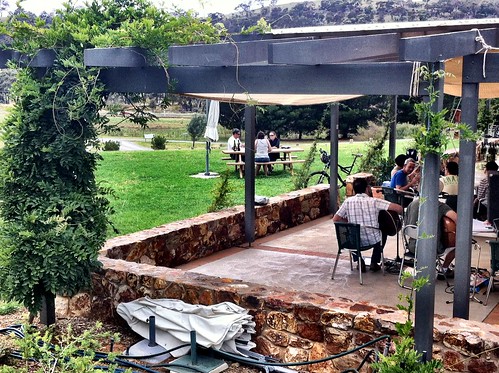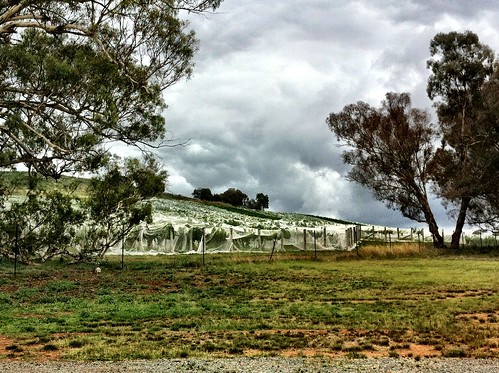
After kicking off the Canberra Wine District Challenge at Mount Majura Vineyard, Jess and I roped two more wine fanciers into the second stage of the Challenge. Together, the four of us took in a day of excellent wine, a magical fairytale forest of red deathcap mushrooms (left well enough alone by us) and an incredible lunch that we stretched out as long as possible as the light mist turned to heavy rain outside.
There were three very different wineries on the list for the day, all near the pretty village of Bungendore, just over the New South Wales border from Canberra. The wineries around Bungendore sit at a much higher altitude than those around Murrumbateman, which we will visit during future stages of the Wine Challenge. This is reputed to make the wines from this are a little different to the majority of the wineries in the region. The standouts for me were the whites (riesling and gruner veltliner, particularly) from Lark Hill, but we will go into that a little later.
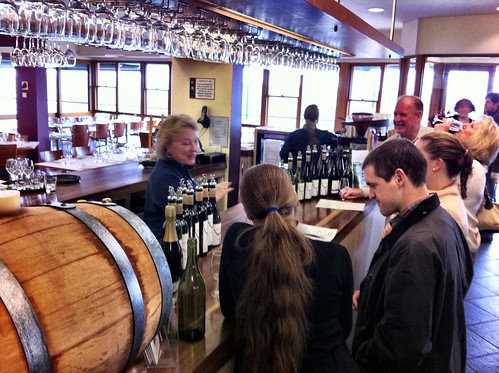
After the four of us crammed into my tiny hatchback (which had just enough room left for a couple of cases of wine in the teeny-weeny boot), we headed straight for Lambert Vineyards. Arriving as we did as the mist turned to spitting rain, the warm and inviting tasting room and cafe with it's fire and sunny staff was a welcome sight indeed.
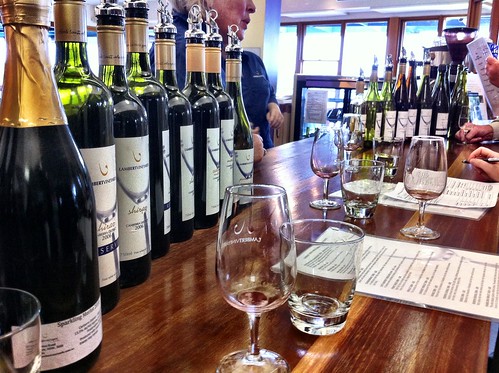
Although all agreed the Lambert labels were a little average, we learned a little lesson about not judging a wine by its label. Lambert has a broad range of whites and reds, including a sparkling of each colour, and staff that were knowledgable about the range, but also very generous with time and pours. The general consensus was that the Lambert reds were the standouts and Matt described their excellent shiraz (especially their Reserve Shiraz) as "a punch in the face, rather than a polite slap" - just the way he likes it, apparently!
As a white lover, I enjoyed their 2008 pinot gris and 2008 riesling, which was dry and citrusy (just the way I like it). Jess and I have hatched a plan to buy their 2008 riesling - already very drinkable - and taste it against their 2004 and 2005 vintages, which are also available and can be delivered to our door. At $25-30 a bottle, this is a well-priced range for a tasty, dry riesling to enjoy with friends. I was less enamoured with their 2006 riesling, which was sweet and spritzy - not at all to my taste, but we were assured it went down a treat with a nice curry.
As we tasted our way through their range, I carefully watched the food coming out of their kitchen and woodfired pizza oven. Let's just say that a second visit to sit and eat some of Lambert's food in front of the fire will definitely be on the cards, especially if this atrocious weather continues.
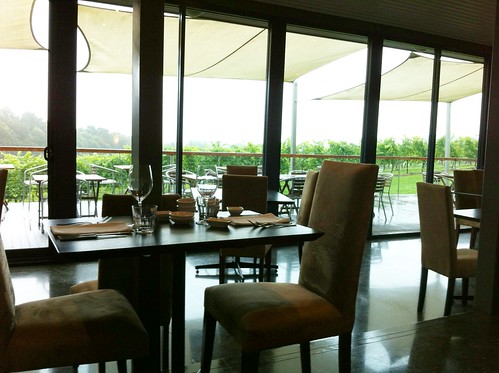
Next stop was Lark Hill Winery where, in addition to tasting their excellent biodynamic wines, we also had a lingering three-course lunch in their airy restaurant. While we didn't try it, given the weather, they had a lovely deck overlooking the vines which looked like it would be a great place to spend a summer afternoon. The owners try to source as much of their produce as close as possible to the restaurant (including from the nearby farm owned by their 90-year old dad). Despite the presence of two big group tables around us, the terrific staff provided us with excellent service and the presentation and taste of the dishes was well worth the journey out from Canberra.
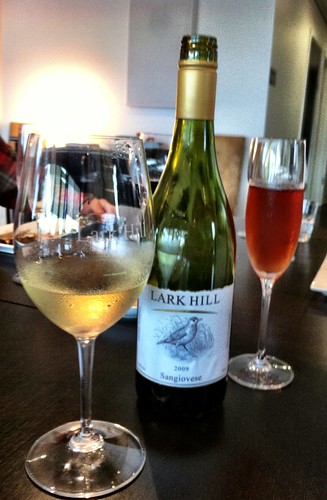
We kicked off our lunch with a rabbit terrine and a glass of their sparkling rose, which is on the house if you check-in to their restaurant on Facebook while you are there. I then switched to their incredible 2011 gruner veltliner, which was the standout wine of the day for me. Rush out there and buy this $40 a bottle drop while there are still a couple of cases left. I have bought a few and intend on cellaring one of the bottles for the five years recommended at the cellar door. Bring on 2017!
The others went the steak and red wine route for mains, buying a bottle of Lark Hill's sangiovese which was described across the dinner table as "eminently drinkable". We finished the gluttony off with pears poached in the house's Auslese riesling and drizzled with caramel sauce and creme anglaise. The only disappointing part of the meal was when we realised that the rain hadn't stopped while we ate, so we had to venture into the wet to get to the cellar door!
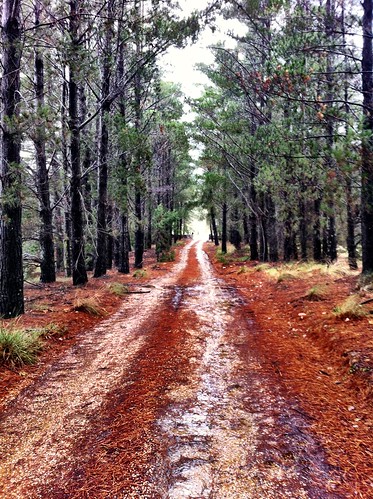
The final stop of the day was Affleck Vineyard and the magical fairytale driveway, arched with pine tree boughs and studded with red deathcap mushrooms. A small wallaby even greeted us as we turned into the drive and the friendly owners made it well worth the detour off the main road.
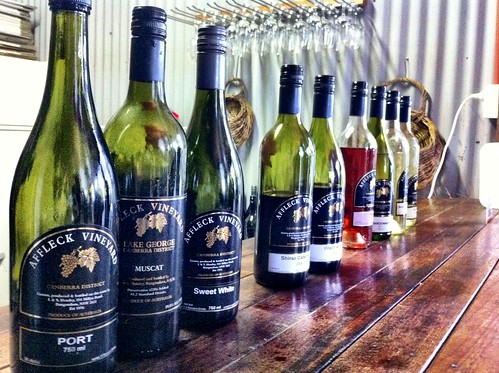
Affleck has a neat range of whites and reds at about the $20-25 range, but I really enjoyed their white port, described very accurately by the owner as "christmas cake in a bottle". Matt and Tanya walked away with a bottle and I have regretted not purchasing one of my own since.
As we drove back down the drive and headed out to the highway for the quick trip home, we all agreed that we could think of no better way to spend a rainy Saturday. The three cellar doors we chose all had distinct atmospheres and generous, friendly hosts. And what more can you ask for, really? Four Canberra District wineries down, 31 more to go.
Thursday, March 8, 2012
Friday, March 2, 2012
Canberra District Wine Region Challenge
I got to know Jess on a very (very) long road trip from Canberra to Echuca. We were heading to a mutual friend's wedding and the hours flew by as we talked-non-stop the entire journey. We established a number of key facts. One - Jess was from Adelaide and had grown up with three incredible wine growing areas at her doorstop. Two - we both enjoy wine (although Jess knows a great deal more about it than I do). Three - Jess was a bit concerned about her first winter in Canberra.
As a Canberra local, the answer seemed clear. What better way to spend the next six months than by introducing Jess to the Canberra Wine District. When I got home I unearthed my copy of the Canberra District Wine Region Map (you can download it here) - there were 35 wineries on the map.
The Canberra District Wine Region Challenge was born. 35 wineries, six months, two women. What's not to love?
We embarked on the challenge last weekend and headed out on Majura Road to kick off at the Mount Majura Vineyard. It's quite a beautiful spot, set in a valley with the vines arcing out up the undulations of the hills behind its cafe/tasting room. It also looks out on Canberra's truffle farm, which I visited last year.
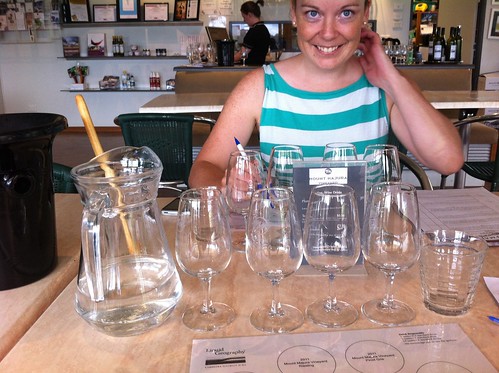
Unlike the vast majority of Canberra's owner-operated cellar doors, Mount Majura takes a slightly different approach to its wine tastings. You arrive to a pre-set table with a clipboard providing you tasting notes on their range of wines and a table mat with circles telling you where to pop your glass to indicate which of the whites (and then the reds) that you you wish to taste. The friendly staff are quite happy to let you taste the full range if you wish - and we did.
The structure of the tasting makes it a relatively formal affair and left us wishing the owner might wander over, pull out a seat and tell us just a little bit more about the place and the wines. But the upside was that we were left to our own devices to take our time and talk openly about the wines we were tasting.
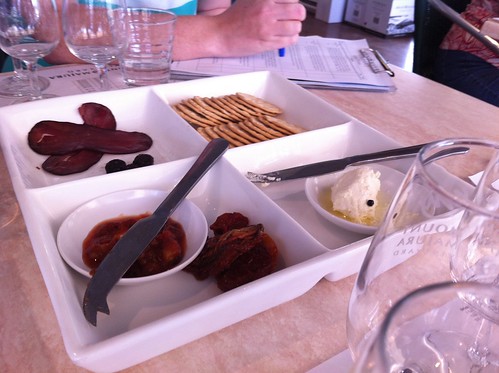
They also offer some lovely tasting plates. The one we ordered offered samples of local produce and worked terrifically with the wines we were sipping along the way. They also have a cheese platter available - and all very reasonable at $15 a platter.
Jess and I found that, despite showing us a very interesting range of whites and reds, we both bought the very reasonable priced white blend at $16 a bottle. It was easy to drink and at that price, perfect for a wind-down glass of vino when you struggle home and settle on the couch. I enjoyed the sparkling white but I like my sparkling very dry with fine bubbles. Jess was less enamoured and, to be honest, when I cracked it open for Sunday night dinner with Mum, it was less spectacular than I remembered. Still eminently drinkable and it held it's bubbles very well over the next couple of days as I enjoyed the leftovers.
All in all, a lovely way to spend an afternoon with your friends. Especially when it's raining and miserable outside!
As a Canberra local, the answer seemed clear. What better way to spend the next six months than by introducing Jess to the Canberra Wine District. When I got home I unearthed my copy of the Canberra District Wine Region Map (you can download it here) - there were 35 wineries on the map.
The Canberra District Wine Region Challenge was born. 35 wineries, six months, two women. What's not to love?
We embarked on the challenge last weekend and headed out on Majura Road to kick off at the Mount Majura Vineyard. It's quite a beautiful spot, set in a valley with the vines arcing out up the undulations of the hills behind its cafe/tasting room. It also looks out on Canberra's truffle farm, which I visited last year.
Unlike the vast majority of Canberra's owner-operated cellar doors, Mount Majura takes a slightly different approach to its wine tastings. You arrive to a pre-set table with a clipboard providing you tasting notes on their range of wines and a table mat with circles telling you where to pop your glass to indicate which of the whites (and then the reds) that you you wish to taste. The friendly staff are quite happy to let you taste the full range if you wish - and we did.
The structure of the tasting makes it a relatively formal affair and left us wishing the owner might wander over, pull out a seat and tell us just a little bit more about the place and the wines. But the upside was that we were left to our own devices to take our time and talk openly about the wines we were tasting.
They also offer some lovely tasting plates. The one we ordered offered samples of local produce and worked terrifically with the wines we were sipping along the way. They also have a cheese platter available - and all very reasonable at $15 a platter.
Jess and I found that, despite showing us a very interesting range of whites and reds, we both bought the very reasonable priced white blend at $16 a bottle. It was easy to drink and at that price, perfect for a wind-down glass of vino when you struggle home and settle on the couch. I enjoyed the sparkling white but I like my sparkling very dry with fine bubbles. Jess was less enamoured and, to be honest, when I cracked it open for Sunday night dinner with Mum, it was less spectacular than I remembered. Still eminently drinkable and it held it's bubbles very well over the next couple of days as I enjoyed the leftovers.
All in all, a lovely way to spend an afternoon with your friends. Especially when it's raining and miserable outside!
Wednesday, February 29, 2012
Stuffed Chicken Breasts with Blue Cheese & Prosciutto
It's a leap year and, on the 29 February 2012, summer has already ended. It's been raining solidly for days, there's more to come and apparently low-lying areas around Canberra are in danger of flooding... I am starting to worry that Kingston is considered low-lying.
But, it's the perfect night to finally break the blogging drought and share a recipe with you - that's if you're still reading after a month's gap! I blame work, but to be fair, I have also been away for a few of the intervening weekends, which - though enjoyable for me - has led to very little cooking and very little blogging. But tonight, with the rain falling outside and absolutely nothing to do other than watch My Kitchen Rules and write-write-write, I offer you my sincere apologies for the break.
To make amends, I am sharing with you a lovely, but straight-forward recipe. I made this on Sunday night for my lovely mother - I also got her hooked on Downton Abbey at the same time, but that's a whole other story!
I always think about chicken breast as ever-so-boring. The grilled meat you eat without sauce when you want to shed a few pounds. But it's definitely not boring if you fill it with a delicious stuffing, wrap it in prosciutto and bake it at 180 degrees Celcius, I assure you.
Now I should note that, the small number of photos I have attached to this post is due to the suggestiveness of raw stuffed chicken breasts. Let me speak no more on this matter but I dare you to make this recipe and not see what I mean. I had to veto an awful lot of photos...
And if that hasn't got you to attempt the recipe, nothing else will!
Stuffed Chicken Breasts with Blue Cheese & Prosciutto
Ingredients
- 2 chicken breasts, skinless and boned (halved, these will feed two girly eaters, but one each for those with a husky appetite!)
- 15 generous but thin slices of prosciutto
- 1 brown onion, diced
- 2 garlic cloves, crushed (diced is okay if you're without a garlic crusher)
- 100 grams crumbly blue cheese (Danish is great and just use the left overs on some crackers before dinner!)
- 1 tablespoon olive oil
Preheat the oven to 180 degrees Celcius.
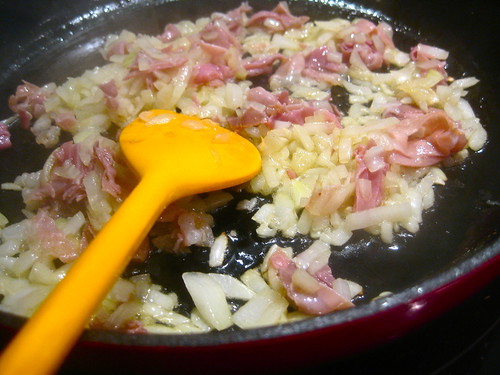
Cut five of the prosciutto slices into ribbons about 1 centimetre in width and dice your onion. Then, in a heavy frypan, add a tablespoon of olive oil and, when hot enough that a small piece of onion plopped in the oil sizzles, add all your onion. Cook, stirring, on a medium heat until the onion starts to soften and become translucent. Add your garlic and stir briefly. Now, add your prosciutto and stir for a further minute. Remove from the heat.
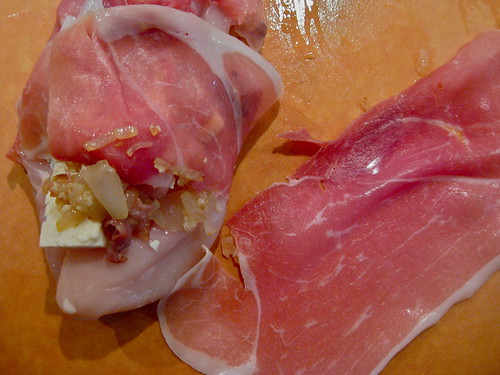
Take your chicken breasts and open out the two sides of the breasts until they look a bit like a butterfly (this is a loose interpretation of what a butterfly looks like, I might add). Depending on how they've deboned the breasts, you may not have enough of a flap to stuff them. If not, just slice a pocket into the breast - be careful you don't slice all the way through. You just need a pocket to take the stuffing.
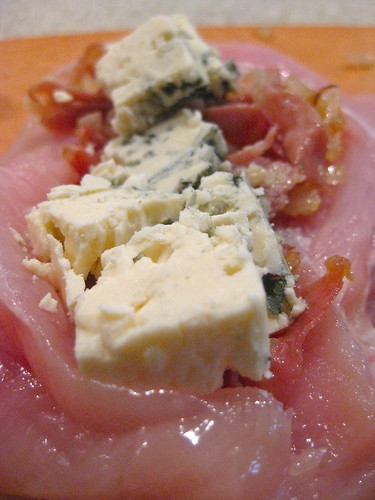
Now, add a small amount (around a dessertspoon-full) of the onion and prosciutto mixture. You need to use your judgment. Don't add so much that you can't cover it with the chicken breast flaps, but not so little that there's hardly any stuffing. Don't worry if you discard a little stuffing if you've put in too much. And don't forget that the same goes for the blue cheese, which you crumble over the top of the onions. Again, not too much, the blue cheese packs a punch with flavour.
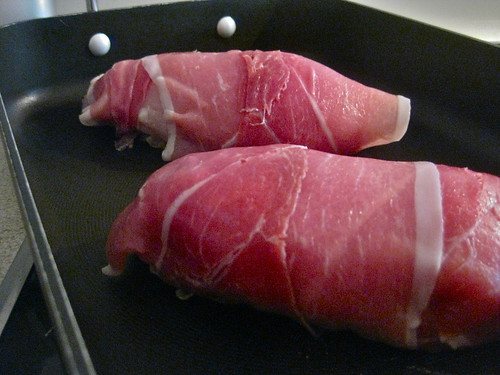
You need to wrap the meat of the breast around the stuffing. Now lay a slice of the prosciutto on your cutting board and place the end of the breast over the prosciutto. Wrap up the breast like a mummy, using about four or five slices per breast, depending on how big they are and how much you stuff them!
Once they're wrapped up and easy to pick up, transfer them to your baking dish or tray with the ends of the prosciutto tucked underneath the chicken breast. Drizzle them with a small amount of oil (I used black truffle oil for a little treat, but anything will do) - around 1/2 tablespoon per chicken breast.
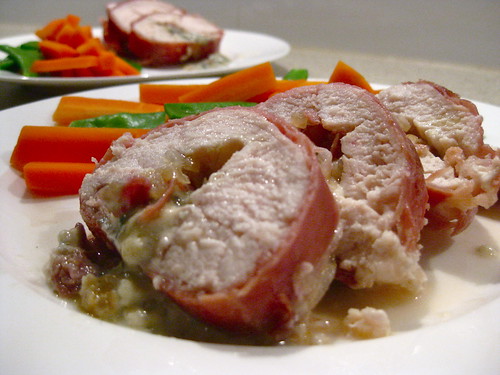
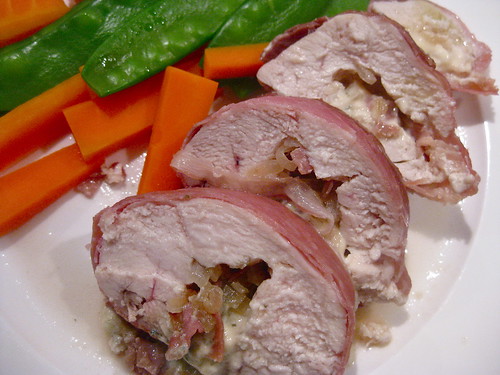
Put the chicken in the oven for around 40 minutes, then remove and slice. Serve hot and oooooozing with cheese. I served this with steamed vegetables to try and counteract the blue cheese, but if you want to go the whole hog, try some mashed potatoes.
I admit this is very old-school and Mid-1970s-Chicken-Kiev but it also happens to be delicious. And it went down a treat on a rainy Sunday night with a good dose of Downton Abbey. Sigh. Oh, Matthew Crawley - care for a stuffed chicken breast? (Maybe he's a leg man...)
Thursday, January 26, 2012
Lamb Tagine with Honeyed Pumpkin
When I told people about the amazing lamb tagine recipe I had made this weekend which, in my usual fashion, I described as "easy if you've got a spare four hours to potter around the house while it cooks", a lot of people gave me sceptical looks. "Don't you need a special pot for that?" they asked. "Four hours, that sounds complicated." But here's the thing - other than the investment of time waiting while it simmers, a tagine is really just a yummy stew.
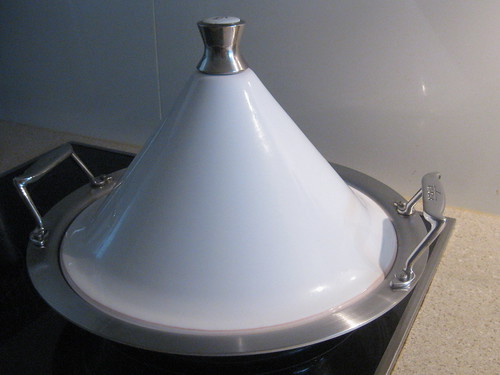
It's not that difficult, honest, and you can do it in a cast iron casserole pot! No fancy tagine required! It's lovely if you can present the final dish at the table with a flourish of the conical tagine lid, but for the four years before my wonderful mother gave me my first proper tagine pot, I cooked some fabulous tagine dishes in my Le Creuset.
I am a big fan of tagines, as any scan of my blog will show you. No scratch that, I am a big fan of Moroccan cuisine and what's not to love about a tagine? You add ingredients and liquid, set it at a low simmer and wait. A fancy stew by any other name.
Now, this tagine is a slightly more complicated version in four ways. Firstly, you have to grate half the onion instead of simply dicing it. Secondly, halfway through the simmer you have to add some ingredients. Thirdly, you have to grate a butternut pumpkin and cook it down to a deliciously caramelised mush and, finally, you have to bake the tagine in the oven for the last 40 minutes. That's it. So if you have a lazy afternoon of chores (or DVD watching) in mind and you want to really impress your guests, this is the dish. (If you're looking for a slightly simpler version, try my Lamb Tagine with Dates & Dried Figs recipe...)
Before I move onto the recipe, I would just like to add that this wonderful Paula Wolfert recipe has been (mildly) adapted from her "The Food of Morocco" cookbook, which I highly recommend to you if you have the slightest interest in Moroccan cuisine.
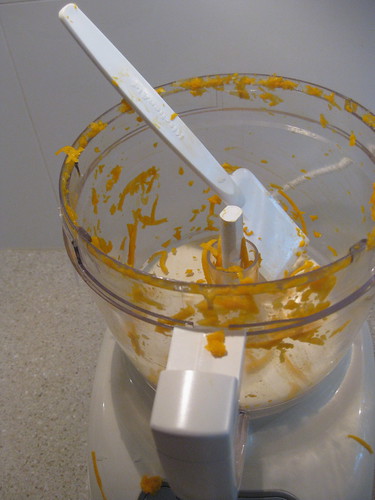
I'd also like to note that all the phaffing about with setting up your food processor to speed-grate the onions and pumpkin was totally worth the effort. I do love using the odd kitchen power tool and the final dish was incredible. The lamb was melt-in-your-mouth tender, the pumpkin added a hint of sweetness without being too much and blended beautifully with Wolfert's spice mix - cinnamon, ginger, turmeric, pepper - and, of course, saffron. Please give it a go one rainy afternoon.
Lamb Tagine with Honeyed Pumpkin
Ingredients
- 1 kilogram diced lamb shoulder
- 1 whole medium-sized butternut pumpkin (squash to our American cousins)
- 1 large onion, grated
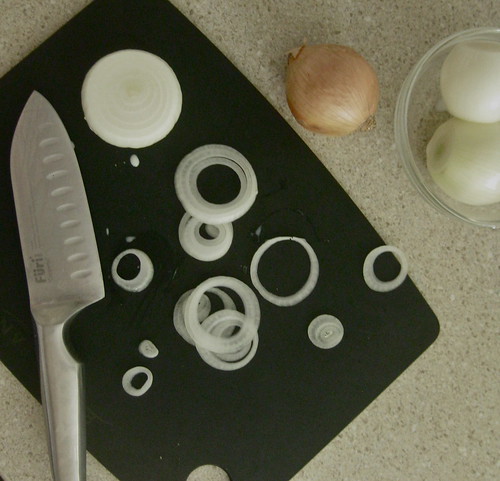
- 2 medium onions, sliced into rings
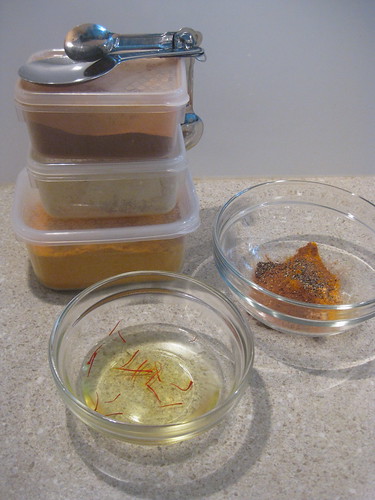
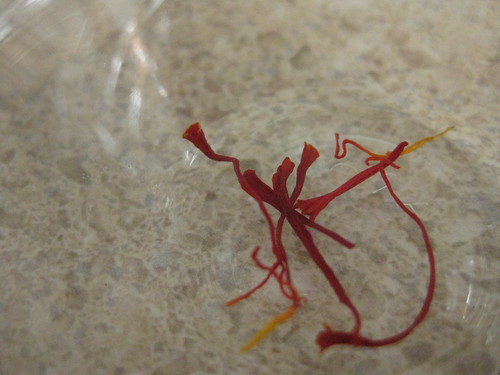
- 1 pinch of saffron, soaked in 1/4 cup hot water
- Salt and pepper for seasoning
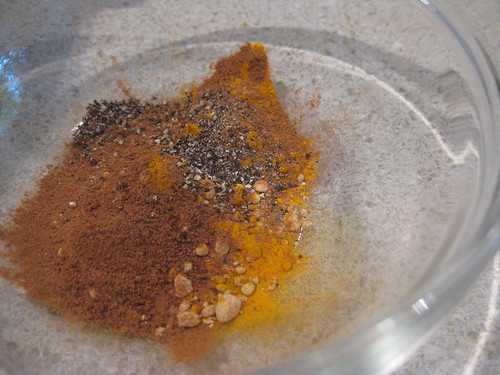
- 2 teaspoons spice mix: 1 teaspoon ground ginger, 1 teaspoon ground turmeric, 1 teaspoon fresh ground pepper, 1/2 teaspoon ground cinnamon, pinch of ground (or freshly grated) nutmeg
- 2 tablespoons and 2 teaspoons unsalted butter
- Pinch of ground cinnamon
- Pinch of ground ginger
- 2 tablespoons honey, preferably floral for example acacia or orange blossom
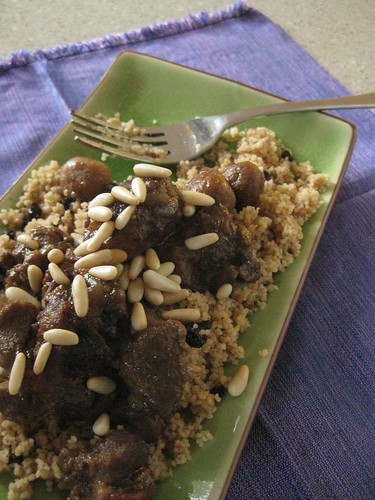
- 2 tablespoons toasted pine nuts for garnish (I forgot to add these, but had them with the leftovers - yum!)
First things first. Toast your pine nuts - you can do this in a nice hot frypan (no oil necessary) or, as I do, in a glass bowl in the microwave 1 minute at a time on high. Keep an eye on them, no matter what method you use, they turn toasty brown in an instant and then black in quick succession!
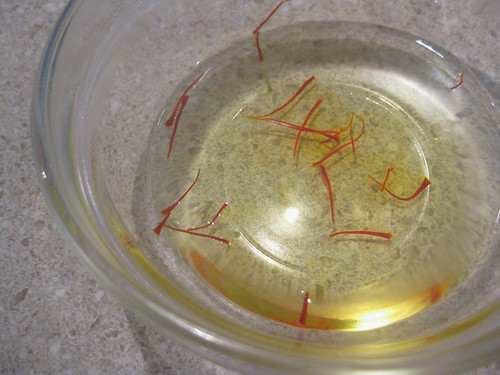
Next, mix up your spice mix in a bowl, ready to use. Then soak your saffron in hot water in a separate bowl. Set these aside.
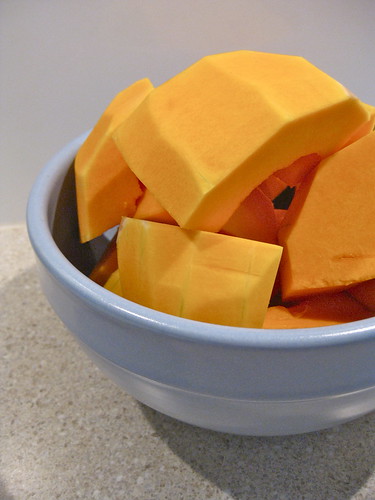
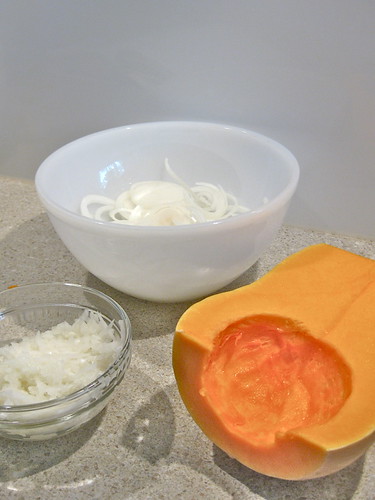
Now, slice up your two medium onions into thin rings for later. Slice and peel the butternut pumpkin, discarding the seeds and pulp in the centre, and peel and halve your onion. This is the point where, if you have one, I highly recommend you set up your food processor with the grating blade. You could hand grate your pumpkin and onion but it will take a lot more effort than washing up your food processor... and more than a few onion-related tears, I am guessing.
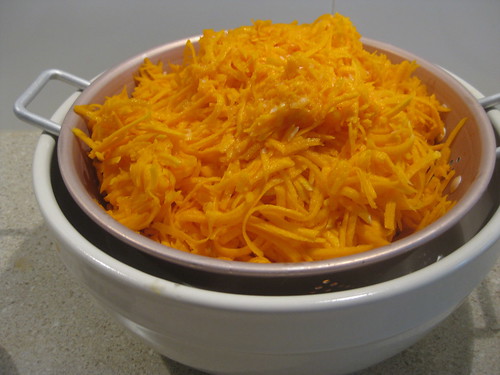
Grate your onion, set aside. Then grate your pumpkin and pop it in a colander over a bowl with a sprinkling of flaked or coarse salt (eg Maldon) to help make the pumpkin sweat a little. Leave it alone while you get to work on the lamb.
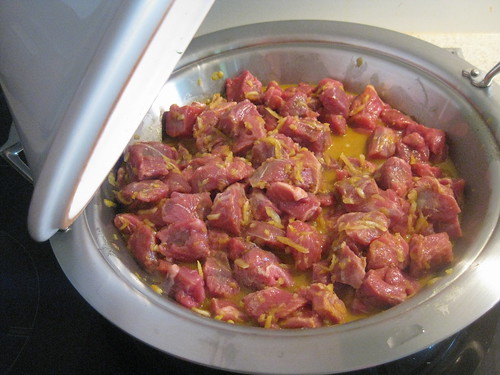
Put your tagine or cast iron casserole pot on a low heat on your stove and add 2 teaspoons of butter. When it has melted, add the grated onion and 1.5 tablespoons of your spice mix and stir until combined - it will turn a wonderful orange-brown colour. Next, add in the lamb, your saffron and the water you've soaked it in, and another 1/2 cup water (should be enough to cover the about two-thirds of the lamb). Stir to combine, cover with the lid and leave to simmer on a low heat for 1.5 hours. This is the time to put on a DVD or do some household chores. Just make sure it stays on a very low simmer.
When the 1.5 hours have passed, add the sliced onions to the lamb and stir. Cover again and continue to cook for another 1.5 hours. Now, don't just run off and pop on another movie - in about 45 minutes you'll need to deal with that grated pumpkin.
Take your grated pumpkin and rinse under the tap. Now, squeeze the water out of the pumpkin into a bowl. Reserve about 2 tablespoons of the liquid and discard the rest. It should be tinted a beautiful orange colour.
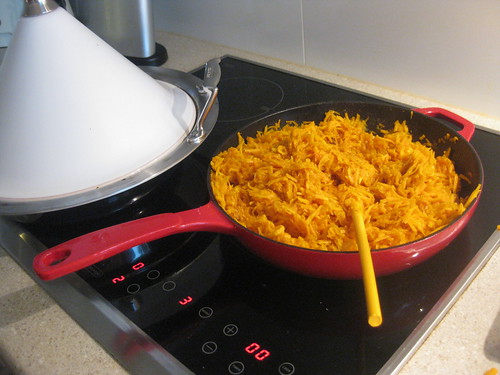
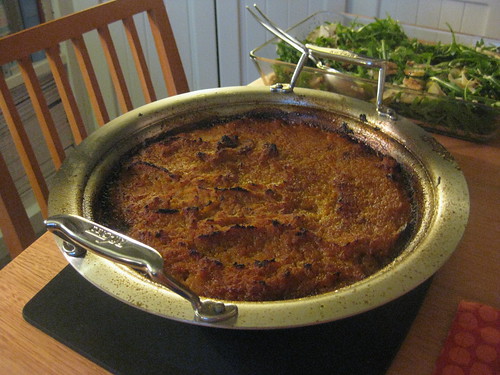
Set a heavy-bottomed frypan on your stove and add the grated pumpkin, the 2 tablespoon of reserved liquid, a pinch of ground cinnamon and ginger and cook on a low heat for approximately 45 minutes, stirring from time to time. This should look something like "jam" according to the recipe. I thought it looked more like a sticky mash pumpkin! Now, preheat your oven to 210 degrees Celcius and take your tagine off the heat.
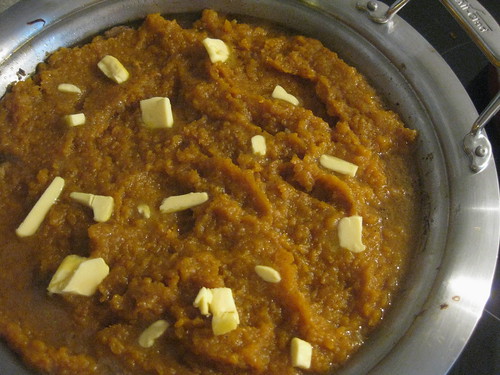
Transfer half the liquid from your tagine into your honeyed pumpkin and stir in. Spoon the pumpkin mash over the top of your tagine and smooth the top - it's like a Moroccan shepherds pie! Stud the top of the dish with the left over 1 tablespoon of butter and bake in the oven for 30-40 minutes, or until the pumpkin top is caramelised and crisped (but not burned).
To serve, sprinkled the pinenuts on top and serve with a flourish of your conical tagine lid at the table.
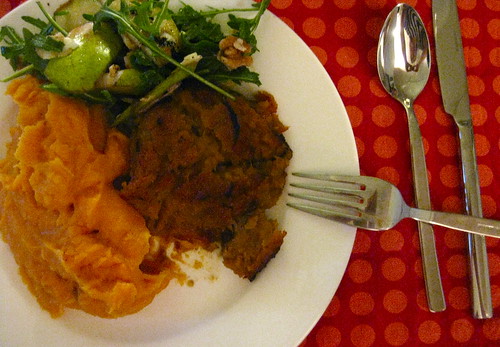
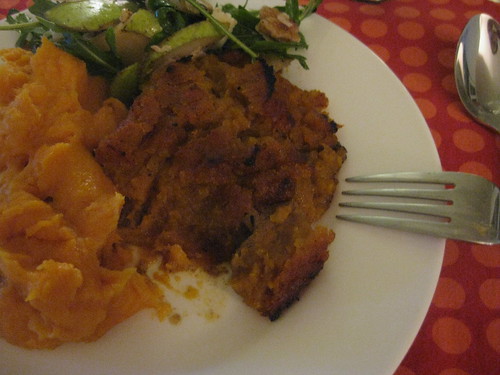
I should note that I forgot to sprinkle the pinenuts over the final dish on the night when I served this to a bunch of appreciative friends, but they seem not to have been that bothered by it. However, I did try the leftovers with pinenuts and it really does add something. So don't forget them! Oh, and that's my sweet potato mash on the plate - a pretty amazing combination.
Friday, January 20, 2012
My Top Four Ingredients of 2011
When I think back on the last year of cooking and eating, I think in terms of the ingredients I have most enjoyed using and tasting. These ingredients have also - as you'd expect - been reflected in the posts of 2011. In many respects, finding new foods and flavours is how I expand my repertoire of recipes and discover new dishes. So, here they are, my top four ingredients of 2011.
1. Coconut
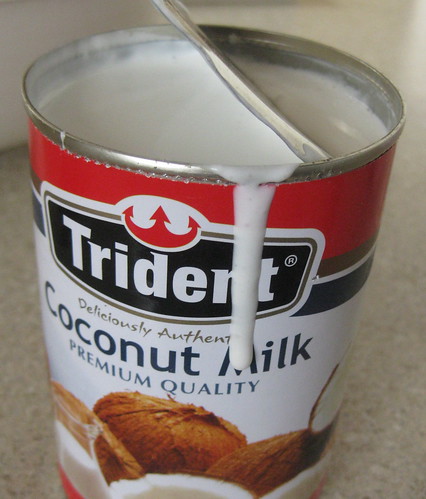
Shredded. Shaved. Coconut milk. Coconut cream. Coconut frosting, powdered, toasted and desiccated.
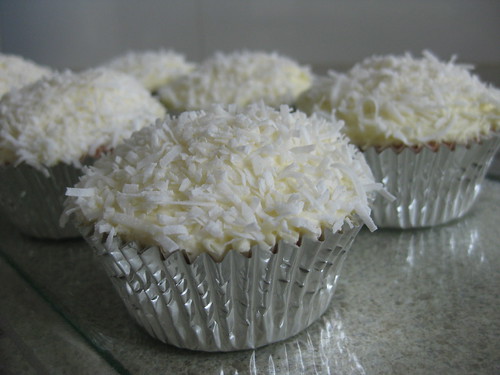
I have used coconut in vegetarian green curries, Thai pomelo salads and (of course) in cupcakes. In many respects 2011 was my Year of the Coconut. The only form of coconut I haven't be able to find since I left South East Asia is fresh, young coconut - I love these with the tops sliced off, sipping the clear juice with a straw and then scooping out the sweet, gelatinous flesh. It doesn't get a whole lot better.
If you'd like to taste a little bit of my favourite new ingredient of 2011, check out Penny's Lemon & Coconut Tart or my Coconut Cupcakes with Vanilla Frosting. Perhaps some Coconut Bread for your Sunday brunch? Or add some coconut cream to your pumpkin soup when the weather turns cold - I highly recommend it!
I am also about to upload a brand new lamb tagine recipe which uses saffron water - the result of pouring hot water over a pinch of saffron strands - and grated pumpkin. It looks amazing, so I'll let you all know how it goes.
3. Cinnamon
What is not to love about cinnamon? Truthfully, this spice features on my list of Top Four Things of All Time. It's up there with fresh sheets and rainy days on the couch reading a good book.
Cinnamon has always featured pretty heavily in all my cooking - from tagines (yep, right up there with saffron) to ice cream and, of course, muffins. Check out the post on Buttermilk Choc-Chip Muffins - without the ground cinnamon these beauties would only taste (and smell) half as good. The Tarte Tatin would also be a lesser dish without the addition of this versatile spice. The Sugar 'N Spice Loaf is pretty damn terrific too, piping hot and straight from the oven. Just saying.
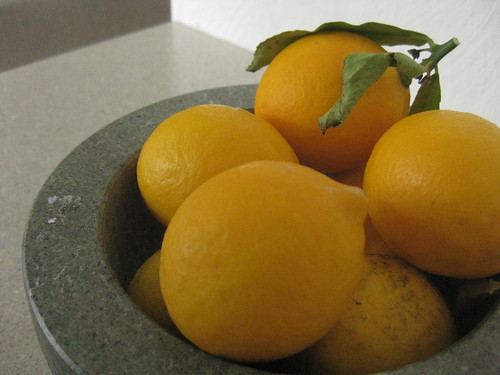
4. Lemon Zest
There's a bit of a theme to my top four ingredients - they are all the types of ingredients which help amp up the flavour of a dish, but not the showponies jockeying for dominance in the mix. Always the bridesmaid, but rarely the bride. I guess that's why I love them so much. Is your plain cake a bit, well, plain? Add some lemon zest. Ditto for your icing - leave out the vanilla, add in a teaspoon of lemon juice and a teaspoon of zest. You won't be sorry.
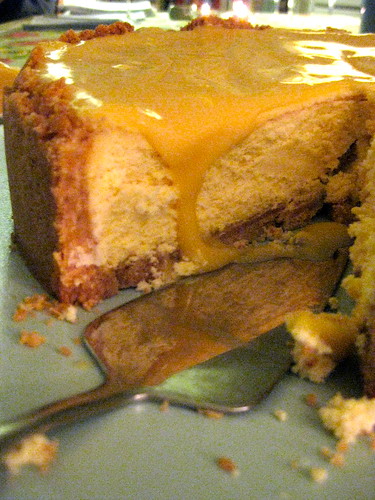
One of the dishes in which lemon zest really stepped out and hogged the limelight a little this year was my Gluten-Free Lemon Curd Cheesecake. I can hand on heart say that this is one gluten-free dish which is better than the gluten-full version - the base was outstanding, nutty and held together without being either too crumbly or too hard to sink your fork through.
1. Coconut
Shredded. Shaved. Coconut milk. Coconut cream. Coconut frosting, powdered, toasted and desiccated.
I have used coconut in vegetarian green curries, Thai pomelo salads and (of course) in cupcakes. In many respects 2011 was my Year of the Coconut. The only form of coconut I haven't be able to find since I left South East Asia is fresh, young coconut - I love these with the tops sliced off, sipping the clear juice with a straw and then scooping out the sweet, gelatinous flesh. It doesn't get a whole lot better.
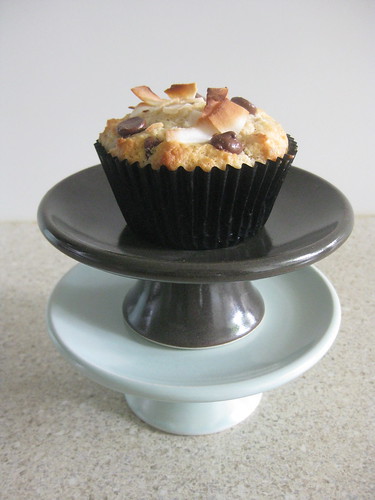
If you'd like to taste a little bit of my favourite new ingredient of 2011, check out Penny's Lemon & Coconut Tart or my Coconut Cupcakes with Vanilla Frosting. Perhaps some Coconut Bread for your Sunday brunch? Or add some coconut cream to your pumpkin soup when the weather turns cold - I highly recommend it!
2. Saffron
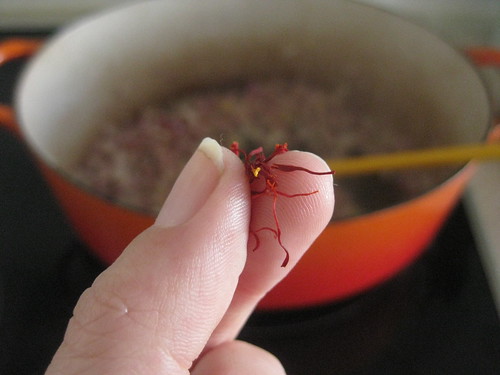
In addition to tinting a dish a lovely orange colour, the fragrance of this spice is for me the scent equivalent of mead - golden, sweet and delicious. While not dominating a recipe, it adds terrific layers of flavour that are really very subtle. When I did a wine tasting course last year I realised just how often the whites I love have often have the scent of saffron to them.
The best example in my repertoire of a saffron-flavoured dish is the lamb tagine with dates from Claudia Roden's Arabesque cookbook. The dish is served piping hot over a plate of fluffy couscous, redolent with the scent of saffron wafting up as you eat. What's not to like?
I am also about to upload a brand new lamb tagine recipe which uses saffron water - the result of pouring hot water over a pinch of saffron strands - and grated pumpkin. It looks amazing, so I'll let you all know how it goes.
3. Cinnamon
What is not to love about cinnamon? Truthfully, this spice features on my list of Top Four Things of All Time. It's up there with fresh sheets and rainy days on the couch reading a good book.
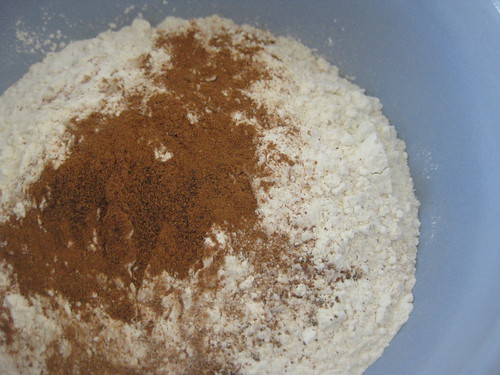
Cinnamon has always featured pretty heavily in all my cooking - from tagines (yep, right up there with saffron) to ice cream and, of course, muffins. Check out the post on Buttermilk Choc-Chip Muffins - without the ground cinnamon these beauties would only taste (and smell) half as good. The Tarte Tatin would also be a lesser dish without the addition of this versatile spice. The Sugar 'N Spice Loaf is pretty damn terrific too, piping hot and straight from the oven. Just saying.
4. Lemon Zest
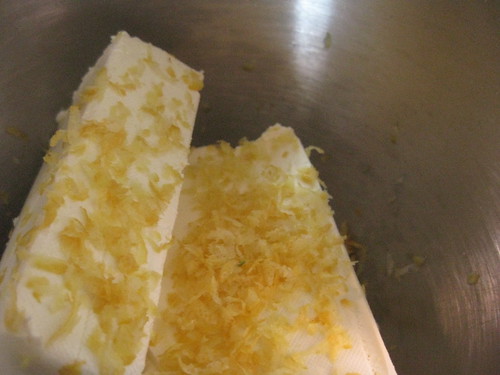
There's a bit of a theme to my top four ingredients - they are all the types of ingredients which help amp up the flavour of a dish, but not the showponies jockeying for dominance in the mix. Always the bridesmaid, but rarely the bride. I guess that's why I love them so much. Is your plain cake a bit, well, plain? Add some lemon zest. Ditto for your icing - leave out the vanilla, add in a teaspoon of lemon juice and a teaspoon of zest. You won't be sorry.
One of the dishes in which lemon zest really stepped out and hogged the limelight a little this year was my Gluten-Free Lemon Curd Cheesecake. I can hand on heart say that this is one gluten-free dish which is better than the gluten-full version - the base was outstanding, nutty and held together without being either too crumbly or too hard to sink your fork through.
I have so many plans and schemes for Four Figs in 2012. Of course, lemon zest, cinnamon, saffron and coconut will stay on high rotation, but I am also keen to extend my Asian cuisine repertoire, embrace unusual flavour combinations in my baking and bring you more of my favourite savoury dishes. I can't wait for the cold weather to arrive so I can spend the weekend whipping up an authentic cassoulet just like we sampled in Kate Hill's kitchen in October. So much to look forward to.
Subscribe to:
Posts (Atom)